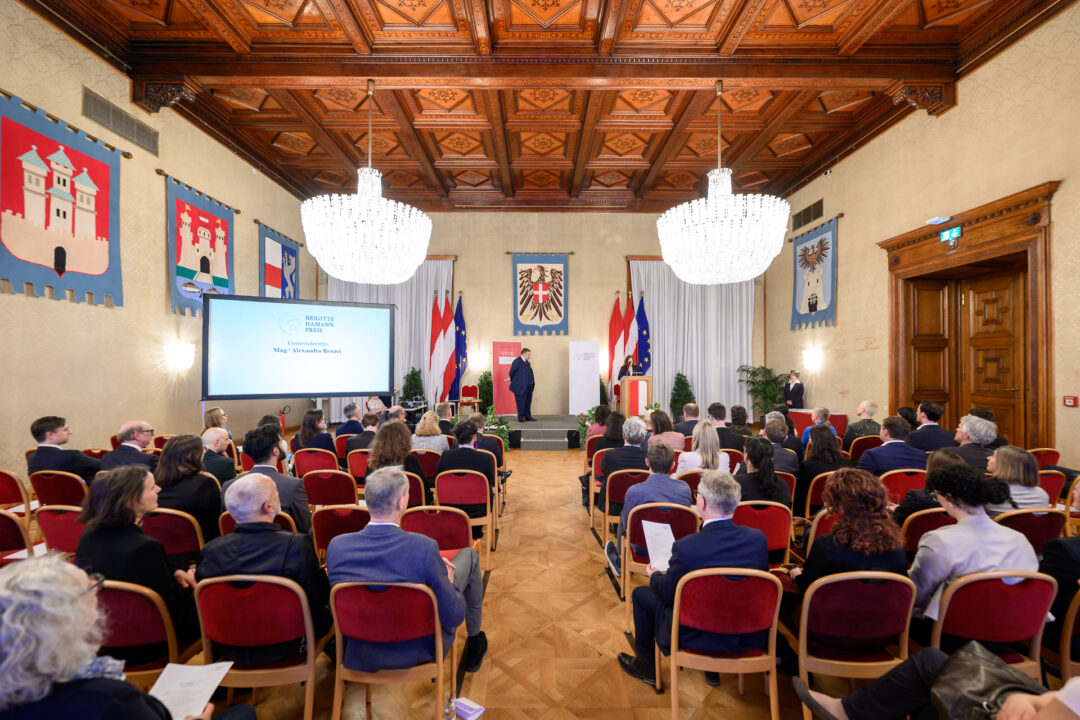
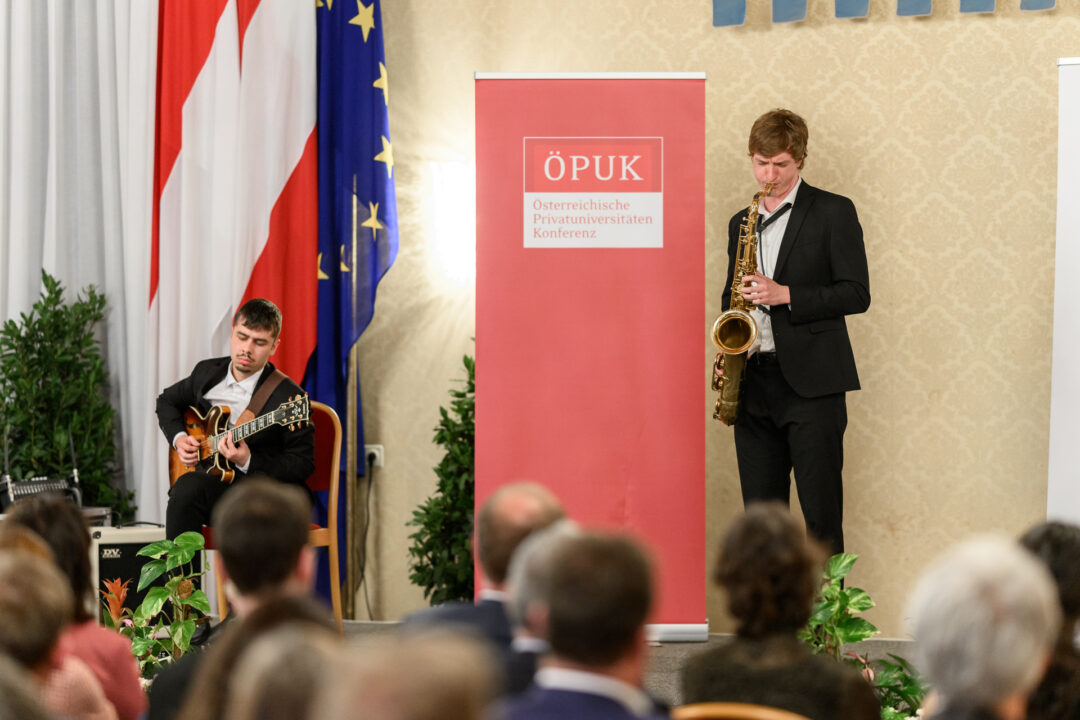
Following the decisions of independent expert juries, the award was presented to graduates of Paracelsus Medical University (PMU), Sigmund Freud University (SFU) and the University of Music and Performing Arts Vienna (MUK). The call for entries had called for excellence, innovation, international outlook, academic rigour, and social impact.
Research into rare diseases honoured
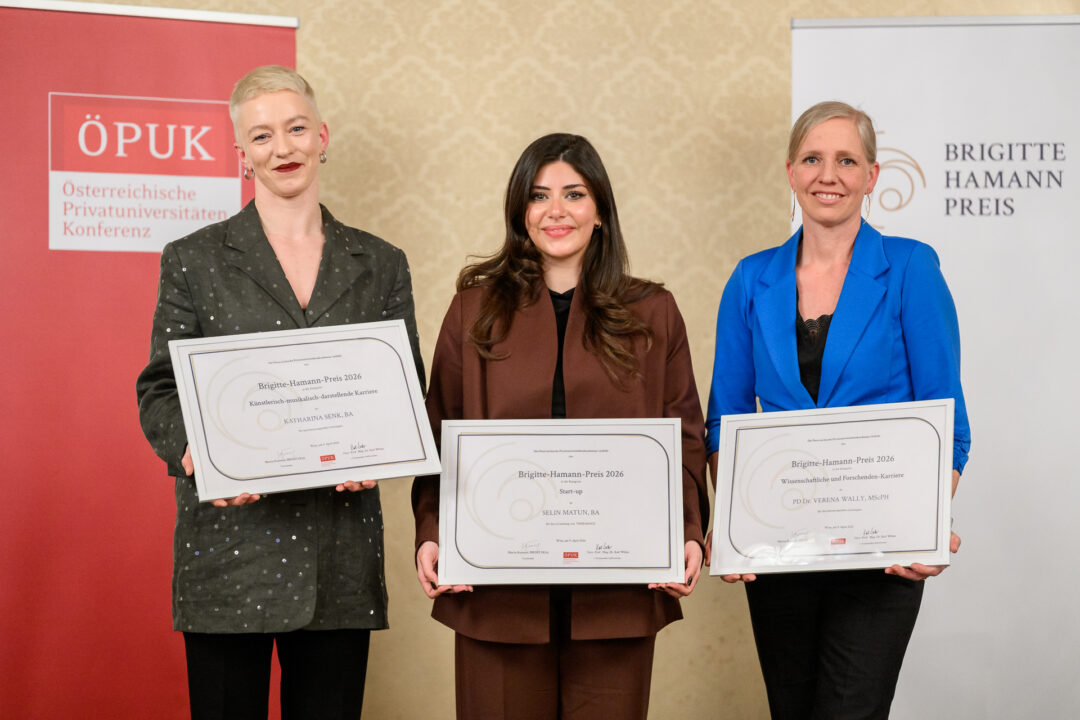
In the Science and Research category, PD Dr Verena Wally (PMU) was awarded. She conducts research into rare diseases in the field of dermatology at the Salzburg Provincial Hospitals and focuses her research on the rare genetic skin condition epidermolysis bullosa. A particular success of her work is the development of a diacerein-containing ointment that can reduce blister formation and is currently being clinically tested in an international Phase II/III trial. The jury was impressed by the researches high international relevance, as it systematically addresses key methodological bottlenecks in clinical research into rare diseases and thereby offers an immediately applicable lever for study quality, comparability and future trial designs, as jury member Sare Balli, BSc, quoted in the jury’s decision at the award ceremony.
International standards in dance education for visually impaired people
The Art/Music/Performing Arts category was won by the dancer and dance educator Katharina Senk, BA (MUK). The jury recognised not only Katharina Senk’s own artistic career as remarkable – she also engages intensively with the aesthetics of access and issues of accessibility on many levels. In particular, Katharina Senk opens up access to and the appreciation of non-verbal arts such as dance for a visually impaired audience. She is a pioneer of the new format of audio description and thus one of five specialists in Europe, highlighted jury member Christine Standfest (ImpulsTanz).
Organising highly sensitive data in psychotherapy practice
The award for the best project in the start-up category went to Selin Matun, BA (SFU), for founding Theradocx. The platform automates the transcription of psychotherapy sessions, generates structured progress reports and enables further semantic and emotional analysis. It aims to significantly reduce the workload of psychotherapists in their daily clinical practice, thereby addressing a structurally significant problem in the field of mental health care. The start-up thus represents a strong integration of applied artificial intelligence and medical practice. The scientific foundation, early validation by users and the scalable SaaS model made it the most balanced and future-proof candidate in this category, said jury member Dr Kasia Greco at the awards ceremony.
More photos from the awards ceremony: https://klausranger.smugmug.com/Events/Brigitte-Hamann-Preis-2026/n-HcxL5L
© ÖPUK/K. Ranger